designed by
australian farmers
for real
farming conditions
OYSTERPOD
a game changer
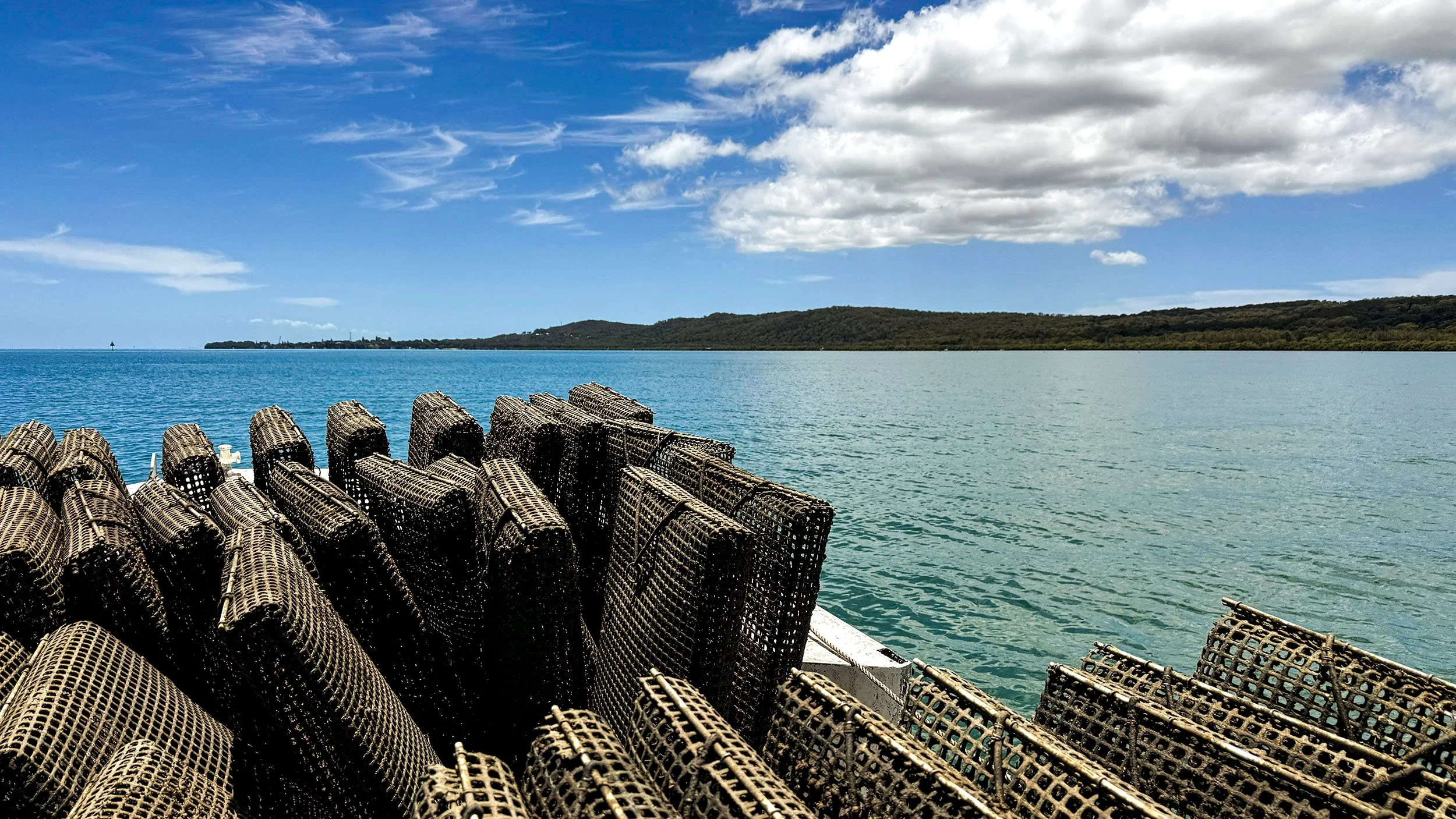
The OysterPod Farming System is purpose built by Australian oyster farmers to perform in real on-water conditions where traditional gear often falls short. It supports the next phase of industry growth by reducing labour intensity, improving reliability in exposed sites, strengthening climate resilience, and unlocking greater value across oyster farms.
OysterPods are constructed from premium marine-grade aluminium, UV-stabilised HDPE components and custom polyrene ropes, selected for durability and long service life in harsh coastal environments. The system is designed for efficient handling and effective air drying, improving biofouling control and reducing ongoing maintenance across a wide range of tidal conditions.
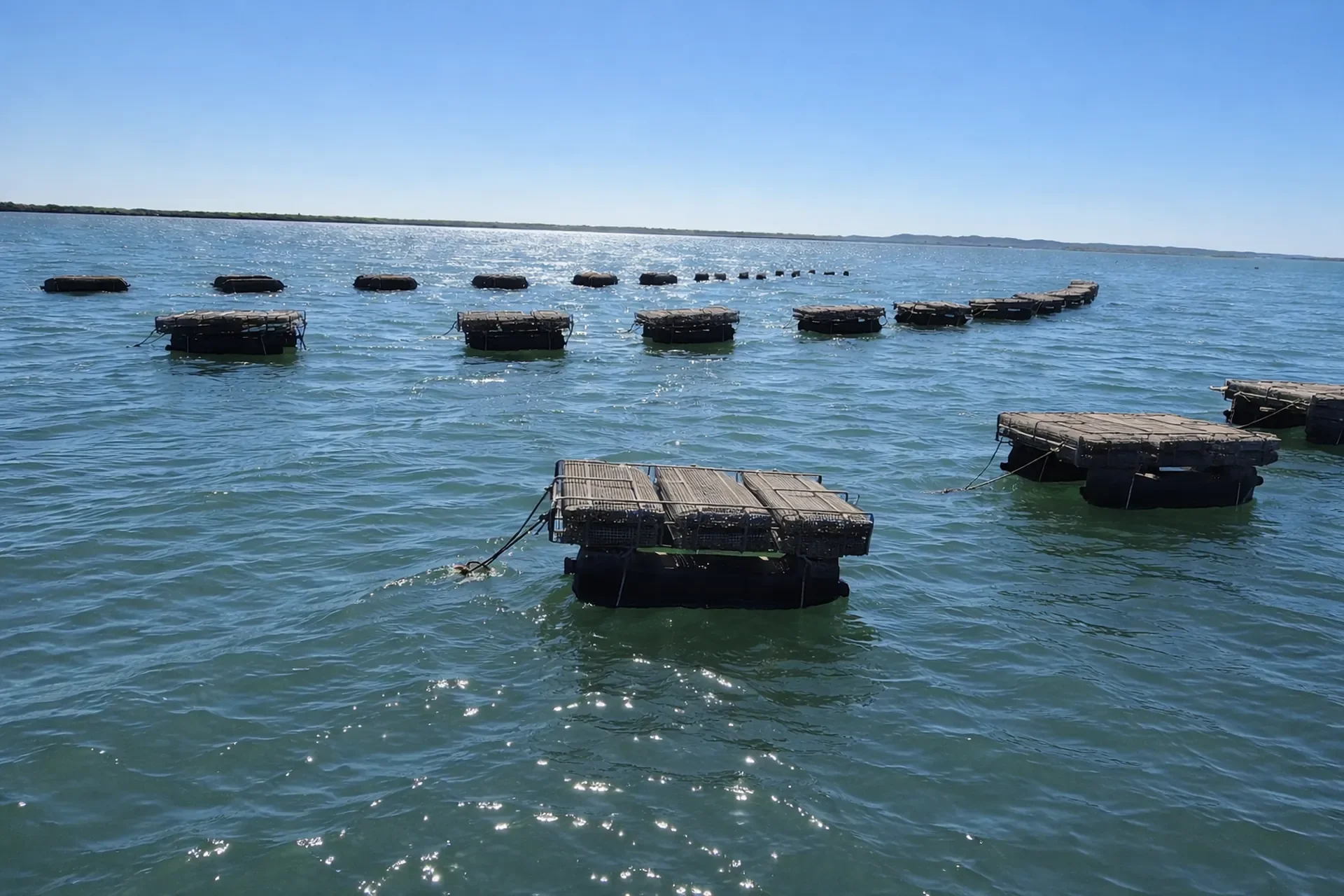
Engineered for extreme weather, OysterPod is submersible and towable, allowing systems to be actively managed and rapidly relocated ahead of severe weather or flooding events, including movement to designated safe-haven areas where required. This helps protect stock and infrastructure, supports continuity of operations, and reduces the risk of downtime and capital loss.
The system also enables higher productive density per hectare, improving lease efficiency and supporting stronger whole-of-farm returns.
Key benefits
Designed by Australian oyster farmers
Marine grade aluminium and UV stabilised HDPE
Superior biofouling control w reduced labour
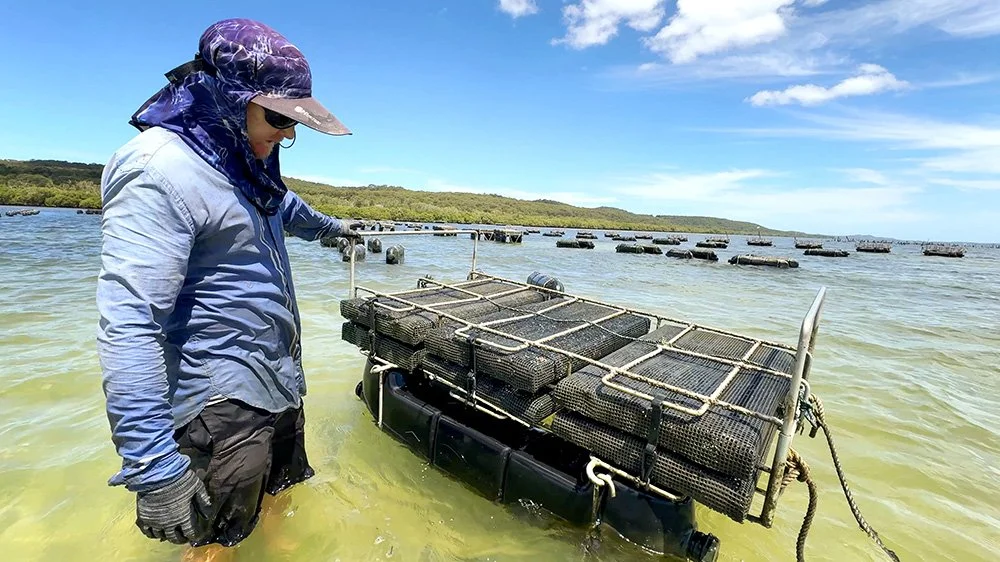
Adjustable legs for diverse tidal environments
Submersible for storm and flood protection
Towable for rapid relocation
Superior production density per hectare
FAQ
Frequently asked questions
-
OysterPod is a scalable, floating oyster farming system designed by Australian oyster farmers to perform in real on water conditions. It is purpose built to improve productivity, handling efficiency and reliability across shallow, exposed and variable tidal environments where many traditional systems struggle.
-
Blue Water Farms is an Australian oyster farming and aquaculture design business based in Moreton Bay, Queensland. We are oyster farmers ourselves and developed the OysterPod system based on firsthand farming experience. We work directly with growers to design, deploy and support OysterPod systems across diverse coastal environments in Australia and internationally.
-
OysterPods are a floating system designed to keep oysters off the seabed using an adjustable leg configuration where required. This improves water flow and airflow around baskets, reduces sediment interaction, and supports effective air drying for biofouling control. The system is engineered for exposed and variable environments and can be configured to suit both shallow tidal leases and deeper water sites.
-
Stocking rates vary by site and farm practice, but an OysterPod typically supports around 100 dozen oysters at full grow out. Indicative deployment of approximately 200–250 units per hectare can support total production in the order of 20,000–25,000 dozen oysters per hectare per annum. Actual outcomes depend on site conditions, husbandry practices and growing cycles.
-
OysterPods are designed to support multiple growing stages from nursery through to grow out. Basket aperture sizes typically range from 4mm through to 17mm, allowing oysters to be managed efficiently as they progress through different stages of the production cycle.
-
OysterPods are constructed using solid marine grade aluminium rod for the structural frame, combined with high quality, UV stabilised virgin HDPE floats and baskets designed for long service life in harsh marine environments. Line kits use custom polyrene ropes selected for durability and marine performance. Each OysterPod cage is approximately 1600mm long x 1000mm wide, with six internal baskets and adjustable clearance to suit site conditions, typically providing around 250mm of air gap beneath the cage during drying.
-
OysterPods are installed as part of a flexible rope anchoring system designed to suit site depth, exposure and tidal range. Systems typically use a backbone anchor line with tether connections that allow individual pods to be easily removed, repositioned or serviced without disturbing the wider layout. Layout and anchoring are always designed as part of a site specific plan.
-
Yes. OysterPods are designed to operate across a wide range of water depths and tidal conditions. In shallow or dry tidal areas, the adjustable leg system allows OysterPods to remain productive while drying at low tide. In deeper water, OysterPods can be deployed without legs and operated from standard farm vessels. The system can be adapted over time as site conditions or farming practices change.
-
No specialised vessels or heavy machinery are required. OysterPods are designed to be operated using standard oyster farming vessels and equipment. On shallow or dry tidal leases, units can often be managed by hand by one or two people. Labour requirements for routine operations, including drying and handling, are generally lower than many traditional systems.
-
Biofouling is primarily managed through regular air drying. Drying frequency depends on local fouling pressure, water quality and season, with many farms operating on a monthly drying cycle of around 2–4 days. OysterPod gear typically does not need to be removed from the water for cleaning.
-
OysterPods are designed for exposed and high energy environments and provide strong resilience to storms and flooding. OysterPods can be intentionally submerged ahead of severe weather events and later re floated once conditions stabilise. Storm response procedures are planned at the farm level to suit local operating conditions.
-
OysterPods are designed to improve productivity within existing leases rather than expand marine footprint. The system keeps oysters off the seabed, requires fewer anchors and results in reduced benthic shading per unit of production compared with many traditional systems. Because OysterPods typically do not require gear to be removed for cleaning, they can also reduce fuel use and energy associated with handling and maintenance operations.
-
By improving labour efficiency, biofouling control, handling access and weather resilience, OysterPods can support strong whole of farm economics compared with racks, long lines and floating pillow systems. Actual returns depend on site performance, labour models and market pathways.
-
Blue Water Farms provides practical technical support including feasibility assessment, layout planning, system configuration, deployment support and ongoing advice as farms refine and scale their operations.
-
Yes. Growers are welcome to visit our operating OysterPod sites in Moreton Bay, Queensland, and selected partner farms to see the system in real on water farming conditions.
-
OysterPod systems have been deployed and tested at our Moreton Bay farms, and other Australian regions for a number of years. Similar floating farming systems have also transformed the oyster farming industry in North America over the past decade, supporting improved productivity, labour efficiency and resilience in demanding on-water conditions.
-
Yes. Beyond OysterPod, we provide a broader suite of integrated products and services to support diverse farming approaches and site conditions. This includes complementary oyster farming equipment such as tumblers, floating baskets, pillow systems and other custom-designed infrastructure, supplied and configured as part of complete aquaculture systems.